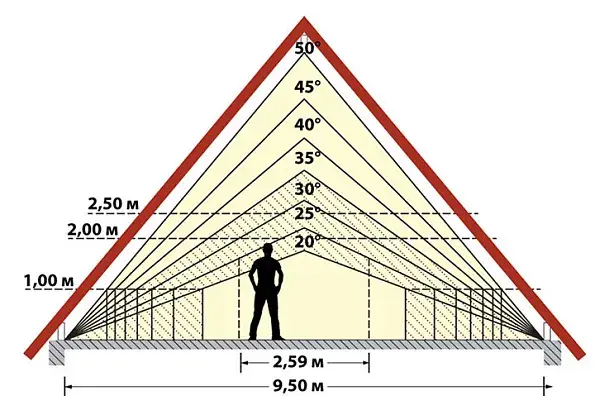
When choosing a roofing material, it is important to consider not only its appearance and price, but also the roof pitch. Each material is designed for a specific range of roof pitches. If the roofing material is selected without taking the roof pitch into account, the risk of leaks increases, water and snow may accumulate, and the service life of the roof may be reduced.
Approximate minimum roof pitches:
Roofing material / Minimum pitch
Standing seam roofing / Klikprofils — from 8°*
Metal roof tiles — from 9°*
Bitumen shingles — from 11°*
Asbestos-free slate — from 10°*
Clay and concrete roof tiles — from 14°*
* The exact minimum roof pitch depends on the specific material, model and manufacturer’s requirements.
What happens if the roof pitch is unsuitable?
If the roofing material is installed on a roof that is too shallow, water drains more slowly and, during heavy rain or snowmelt, may penetrate through joints and overlaps. This increases the risk of leaks, damage to the roof structure and premature wear of the roofing material.
In addition, if the manufacturer’s requirements are not followed, the material warranty may not cover any resulting problems.
How to choose the right material?
First, determine the roof pitch, and only then choose the most suitable roofing material. For one roof, metal roof tiles may be the optimal choice, while another may be better suited to standing seam roofing or bitumen shingles.
TOP HOUSE GROUP will help you choose the right roofing material based on the roof pitch, construction and specific characteristics of the project, and will also calculate the required quantity of materials.
Not sure which material is right for your roof? Contact us — we will provide professional advice and help you make the right choice.