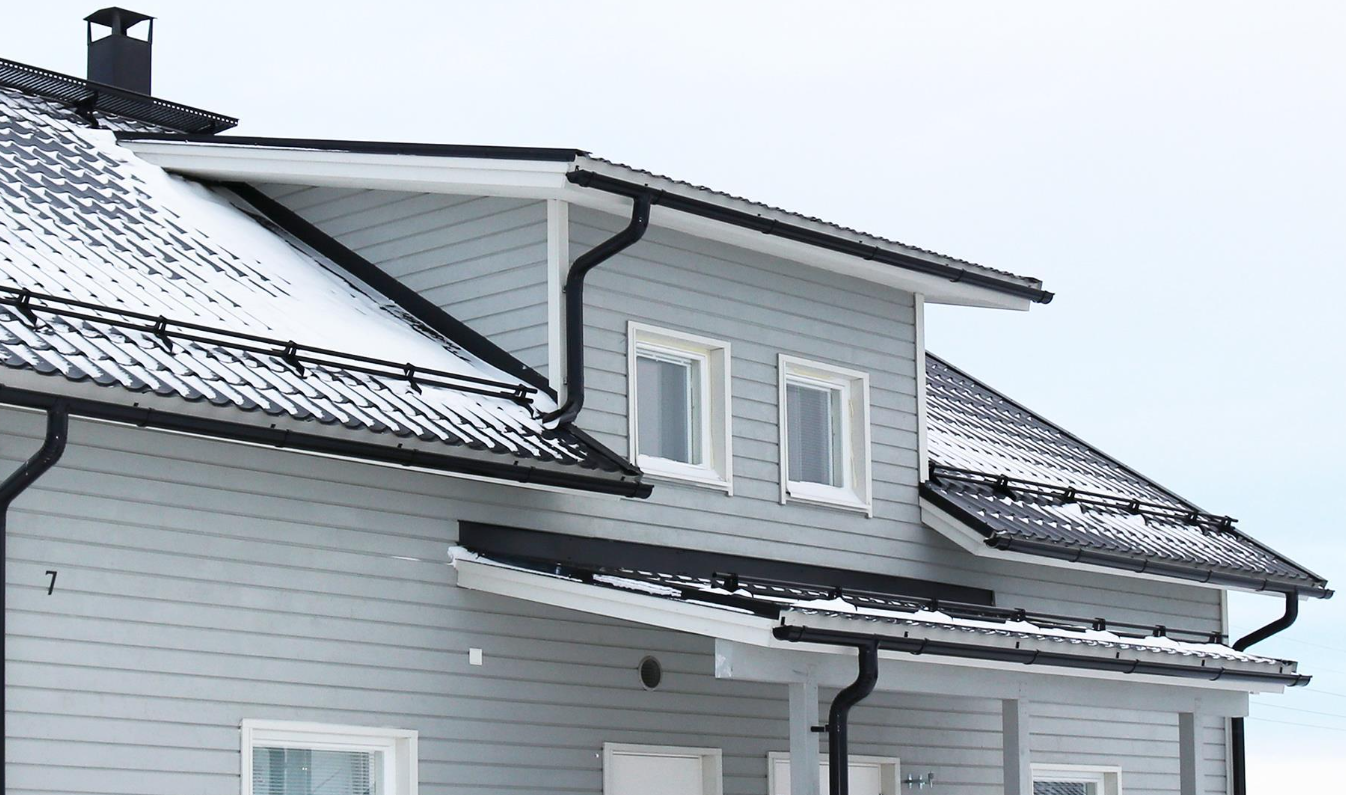
In winter, roofs are exposed to additional stress caused by snow, temperature fluctuations and ice formation. To prevent leaks, damage to gutters and uncontrolled snow sliding off the roof, it is important to inspect the roof and prepare it for the cold season in advance.
Let’s look at what you should pay attention to before winter arrives.
1. Inspect the condition of your roof
In autumn, it is recommended to inspect the roof covering and make sure it is ready for winter conditions. Pay particular attention to:
2. Clean the gutter system
Leaves and other debris can obstruct water drainage. When temperatures drop below freezing, water may freeze in gutters and downpipes, causing ice build-up and blockages.
Before winter, clean the gutters, check the fastenings and make sure water can drain freely away from the building.
3. Provide protection against snow and ice
Snow sliding off a roof can pose a danger to people, vehicles and nearby structures. Snow guards help control the movement of snow and reduce the risk of sudden snow slides.
When selecting snow guards, it is important to consider the roof pitch, roofing material and snow load. Snow guards do not eliminate the need to calculate the load on the roof’s supporting structures.
Roof heating cables are also used to prevent ice build-up in gutters and downpipes. However, ice formation can also be caused by insufficient insulation or inadequate ventilation of the roof space. It is therefore important to address the underlying cause.
4. Should snow be removed from the roof?
The need for snow removal depends on the amount and moisture content of the snow, the building structure and the calculated snow load. Particular attention should be paid to accumulations of wet snow, which is significantly heavier than dry snow.
If the snow load becomes excessive or signs of structural damage appear, contact a specialist. Removing snow from an icy roof yourself can be dangerous.
Prepare your roof for winter in advance
Regular roof inspections, gutter cleaning and timely repairs help reduce the risk of winter damage and extend the service life of your roof.
If you are planning to build a new roof or replace an existing one, it is important to choose the right roofing material and plan the necessary protective measures in advance.
TopHouse offers roofing materials for different types of roofs. Contact us for professional advice and a calculation of the materials required for your project.
Let’s look at what you should pay attention to before winter arrives.
1. Inspect the condition of your roof
In autumn, it is recommended to inspect the roof covering and make sure it is ready for winter conditions. Pay particular attention to:
- the condition of fasteners and roof covering joints;
- connections around chimneys and ventilation pipes;
- ridges, valleys and other areas where water may accumulate;
- damage to the protective coating and any signs of corrosion.
2. Clean the gutter system
Leaves and other debris can obstruct water drainage. When temperatures drop below freezing, water may freeze in gutters and downpipes, causing ice build-up and blockages.
Before winter, clean the gutters, check the fastenings and make sure water can drain freely away from the building.
3. Provide protection against snow and ice
Snow sliding off a roof can pose a danger to people, vehicles and nearby structures. Snow guards help control the movement of snow and reduce the risk of sudden snow slides.
When selecting snow guards, it is important to consider the roof pitch, roofing material and snow load. Snow guards do not eliminate the need to calculate the load on the roof’s supporting structures.
Roof heating cables are also used to prevent ice build-up in gutters and downpipes. However, ice formation can also be caused by insufficient insulation or inadequate ventilation of the roof space. It is therefore important to address the underlying cause.
4. Should snow be removed from the roof?
The need for snow removal depends on the amount and moisture content of the snow, the building structure and the calculated snow load. Particular attention should be paid to accumulations of wet snow, which is significantly heavier than dry snow.
If the snow load becomes excessive or signs of structural damage appear, contact a specialist. Removing snow from an icy roof yourself can be dangerous.
Prepare your roof for winter in advance
Regular roof inspections, gutter cleaning and timely repairs help reduce the risk of winter damage and extend the service life of your roof.
If you are planning to build a new roof or replace an existing one, it is important to choose the right roofing material and plan the necessary protective measures in advance.
TopHouse offers roofing materials for different types of roofs. Contact us for professional advice and a calculation of the materials required for your project.